Last updated: August 21, 2026
By: LA Injury Lawyers Editorial Team
When a guest slips and falls at a California hotel, liability is not automatic. A hotel operator, property owner, management entity, contractor, or restaurant operator may be held responsible only if they maintained control over the hazardous area, had actual or constructive knowledge of the danger, failed to exercise reasonable care, and directly caused the guest’s injury.
Although a hospitality property appears to be a single unified operation to an arriving guest, operational control is frequently divided among multiple parties behind the scenes. For instance, the hotel may manage the lobby, while an independent company operates the restaurant, a separate landlord owns the parking facilities, and an outside contractor services the pool area. Consequently, determining the precise location of the accident is the critical first step in any investigation.
Retaining a Los Angeles slip and fall lawyer can be crucial in uncovering the responsible corporate and operating entities before essential evidence—such as surveillance footage, maintenance logs, and housekeeping records—is permanently lost.
The Four Questions That Decide a Hotel Fall Claim
Pursuant to California Civil Code § 1714, premises liability adjudication in the State of California is governed by ordinary negligence principles. The civil jury instructions authorized by the Judicial Council organize this legal framework around the core elements of ownership, leasing, occupation, or control; negligent use or maintenance of the property; resulting harm; and proximate causation.
In evaluating a claim arising from a guest fall, the following inquiries must be resolved:
- What specific condition precipitated the fall? The claimant must identify a particular hazard, such as water, food debris, a displaced mat, deficient illumination, a broken structural step, or an uneven surface transition.
- Which entity maintained operational control over the precise location? Liability attaches to the party exercising practical control and carrying explicit responsibility, rather than the corporate brand associated with the guest’s reservation.
- What form of legal notice existed? It must be established whether the responsible party created the hazard, received a prior complaint, observed the condition, or failed to perform inspections for an unreasonable duration.
- In what manner did the condition cause the injuries? Medical documentation, scene analysis, and witness testimony must conclusively link the identified hazard to the subsequent fall and sustained losses.
Hotel Control-Zone Investigation Map
Different areas generate different records. This map helps direct preservation requests.
| Hotel zone | Potential controller or responsible party | High-value evidence |
|---|---|---|
| Guest room or bathroom | Hotel operator, management company, housekeeping contractor or maintenance vendor. | Room assignment, cleaning checklist, work orders, prior complaints, fixture records, photographs and access logs. |
| Lobby, hallway or elevator area | Hotel operator, property manager, janitorial company or renovation contractor. | Inspection rounds, surveillance, cleaning schedule, employee radio messages, floor treatment and incident history. |
| Restaurant, bar or banquet area | Hotel, separate food-service operator, event company or vendor. | Operating agreement, spill response, server assignments, event timeline, video and receipts. |
| Pool deck or spa approach | Hotel, pool contractor, maintenance company or property owner. | Surface specifications, water-removal practices, warning signs, maintenance logs, video and weather data. |
| Parking, valet or exterior walkway | Owner, hotel, parking operator, valet company, security company or landscape contractor. | Lease boundaries, lighting inspections, pavement repairs, valet records, sweep logs and camera locations. |
The contract between businesses can help allocate responsibilities, but a contract does not automatically erase duties owed to a guest. Actual control and conduct still matter.
Notice: What Did the Hotel Know, and When?
If a hotel employee created the hazard, notice may be direct. When another guest spills a drink or tracks in water, the case often turns on actual or constructive notice.
In Ortega v. Kmart Corp., the California Supreme Court explained that a plaintiff can use evidence of an unreasonable failure to inspect to support an inference that a hazard existed long enough to be discovered. The decision does not impose a universal inspection interval. Reasonableness depends on the location, traffic, risk and circumstances.
Useful notice evidence includes:
- prior guest complaints or service calls;
- employee observations and radio traffic;
- inspection and housekeeping timestamps;
- recurring leaks or drainage problems;
- repair history and work orders;
- video showing how long the condition existed; and
- the absence or late placement of warning signs.
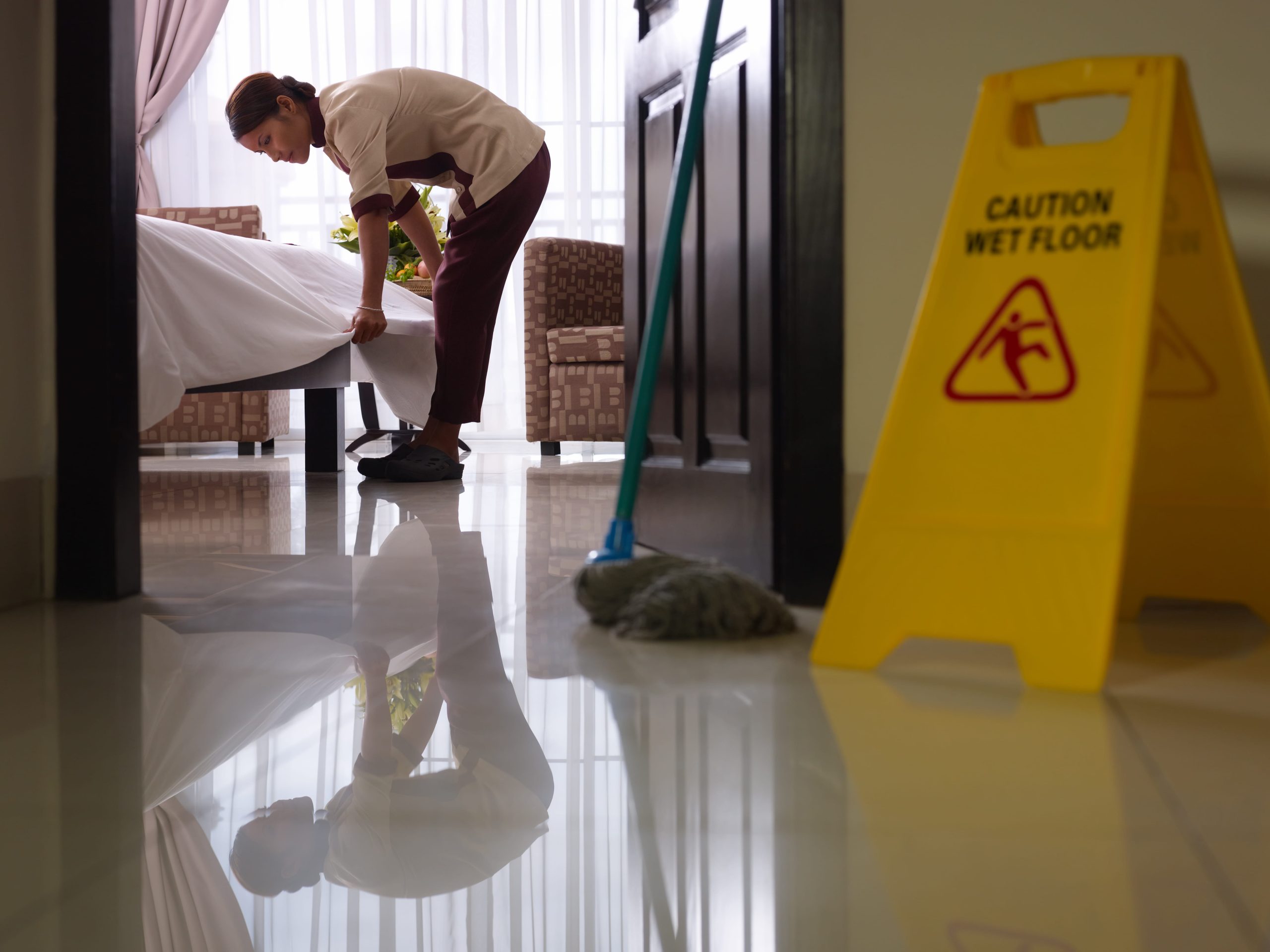
A warning cone is evidence, not an automatic defense. Its timing, placement, visibility and relationship to the hazard all matter.
Evidence to Collect Before Checkout
Photograph the Route, Not Just the Floor
Capture the approach from eye level, the full hazard, lighting, nearby signs, measurements and the final position of shoes or personal items. Take wide and close images. Preserve the originals with date and time metadata.
Report the Incident With Specific Facts
Ask the hotel to document the exact time, location, and condition. Obtain the report number and names of employees who responded. Do not guess how long the hazard existed or sign a statement you cannot verify.
Identify Every Witness
Guests leave. Employees change shifts. Record names, phone numbers, room or event connection, and what each person observed.
Preserve the Business Records
A written request should identify surveillance, inspection rounds, housekeeping logs, work orders, complaints, employee schedules, incident photographs, contracts and communications for the precise location and time window.
Keep Medical and Travel Consequences
Follow medical advice. Save the room receipt, transportation changes, missed events, additional lodging, medical bills and wage records. A diagnosis and a canceled trip are different categories of evidence; both require documentation.
Common Hotel Fall Locations Need Different Proof
Bathrooms and Guest Rooms
Water alone does not prove negligence in a bathroom. Investigate whether a leak, defective fixture, missing nonslip treatment, unstable surface, poor drainage, or failed housekeeping process created an unreasonable hazard.
Lobbies and Hallways
High foot traffic, weather, luggage, and cleaning operations can create temporary conditions. Video and inspection records may establish whether the area was checked and when warning signs appeared.
Pool Decks
Some water is expected near a pool, so the issue is not simply whether the surface was wet. The investigation may consider surface condition, drainage, maintenance, algae, lighting, transitions and warnings. Serious pool or spa incidents may require the more specific analysis described by a Los Angeles swimming pool accident lawyer.
Parking and Valet Areas
Potholes, wheel stops, oil, poor lighting and elevation changes require proof of control and notice. The hotel brand, parking owner and valet operator may maintain separate policies and records.
The Hotel May Blame the Guest
California uses comparative negligence. A defense may argue that the guest was distracted, ignored a visible warning, wore unsafe footwear, used an unauthorized route or was impaired. Supported fault can reduce recovery but does not automatically eliminate another party’s negligence.
Context matters. A photograph taken after the fall may not show the lighting or crowding beforehand. Preserve video, witness accounts and contemporaneous messages before accepting a simplified blame narrative.
Damages and Insurance
A supported claim can seek medical expenses, rehabilitation, lost income, reduced earning capacity and other economic loss. Non-economic damages can address pain, suffering and loss of enjoyment of life. The claim’s value depends on proof of injury, recovery, fault, coverage and the effect on the individual.
The hotel, owner and contractor may have separate liability policies and indemnity agreements. Who pays is determined through responsibility and coverage analysis, not by the logo on the building.
Deadlines Apply Even When the Guest Lives Elsewhere
California’s general deadline for many personal-injury lawsuits is typically two years from injury, according to the California Courts. Exceptions can shorten or change the period. An out-of-state guest should not assume the deadline from home applies to a California incident.
Evidence deadlines are usually practical, not statutory: hotel video can disappear far earlier than the lawsuit deadline.
About the Firm and Its Managing Attorney
LA Injury Lawyers investigates control, notice, contracts, insurance and medical damages instead of treating every fall as the same claim. The firm serves Los Angeles and surrounding areas from Woodland Hills, with help available in English and Spanish.
Managing Attorney Ashton Cohen began practicing law at age 24 in securities and class-action litigation. He later gained business-litigation experience at a national law firm, represented major corporations and insurance carriers and served as General Counsel and strategist for a major media organization.
The State Bar of California lists Ashton S. Cohen, license #312255, as active. This draft is not represented as reviewed by him until legal review is completed.
Preserve the Hotel’s Records Before They Reset
If you were injured in a California hotel fall, keep your reservation, incident report, photographs, witness contacts, medical records and travel losses together. Call LA Injury Lawyers at (818) 418-4000 or contact LA Injury Lawyers for a free case review. Hablamos español.
Frequently Asked Questions:
1. Is a hotel automatically responsible when a guest falls?
No. The guest must generally prove a dangerous condition, the responsible party’s duty and failure to use reasonable care, causation and damages.
2. What if the spill came from another guest?
The claim may depend on whether the hotel knew or should have discovered the spill through reasonable inspection and had time to address it.
3. Can a contractor be responsible instead of the hotel?
Possibly. A cleaner, restaurant operator, parking company or maintenance vendor may control the area or have created the hazard. The hotel may still have separate duties.
4. What if there was a warning sign?
A sign does not end the analysis. Its timing, visibility, wording, placement and whether a safe alternative existed can all matter.
5. Can I make a claim if I returned to another state?
Potentially. The incident and California law still require evaluation. Preserve records and obtain advice before evidence disappears.
6. Should I ask the hotel for surveillance video myself?
You can request preservation immediately. A targeted written request should identify the exact location, date and time because hotels may have multiple systems and short retention periods.
Legal Disclaimer
This article is for general informational purposes only and does not constitute legal, medical or travel advice. Reading it or contacting LA Injury Lawyers does not create an attorney-client relationship. Every case is different; control, notice, comparative fault, insurance, deadlines, injuries and damages depend on the specific facts.