
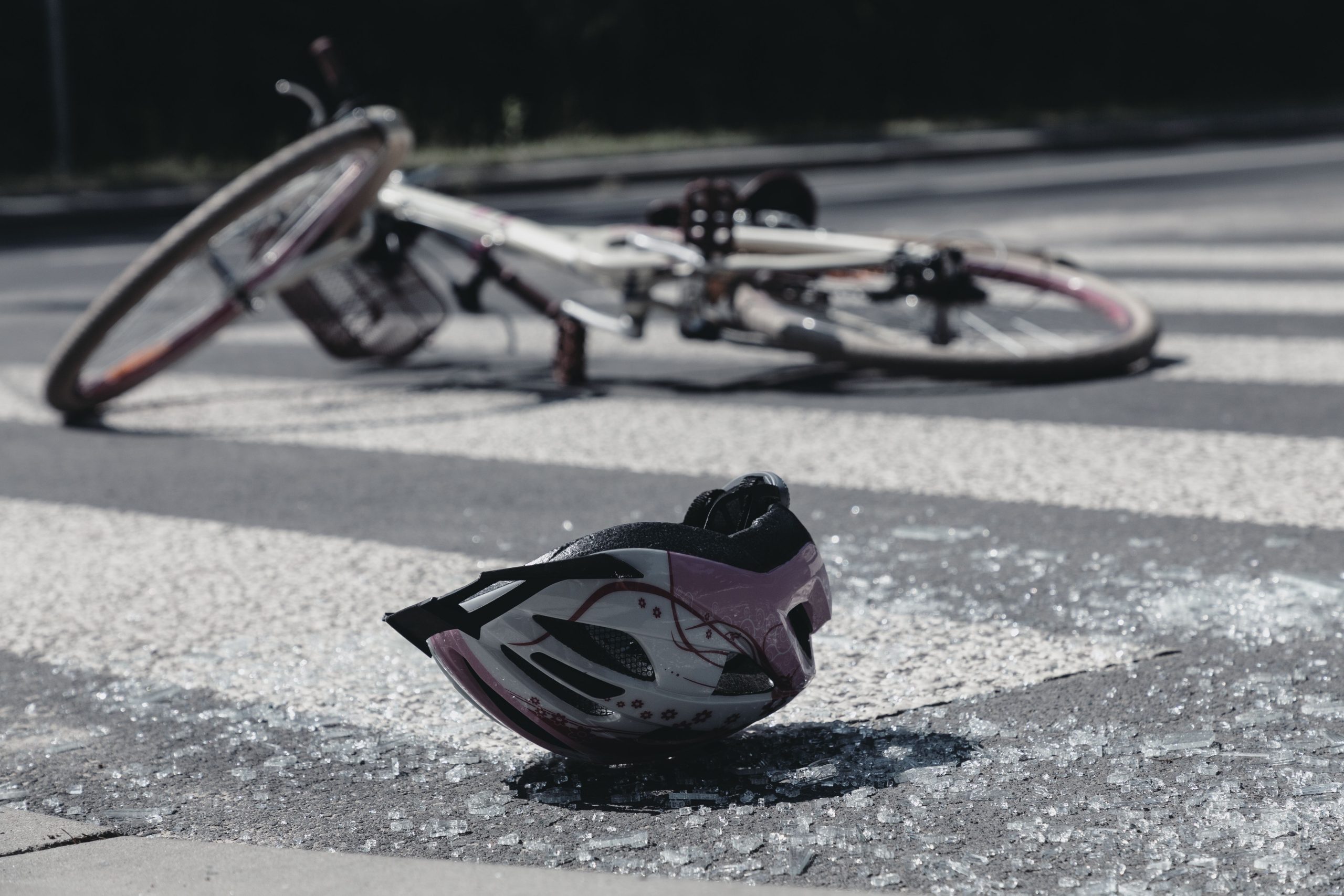
One of the first things an insurance adjuster raises after an e-bike or scooter crash in Los Angeles is helmet use. It’s a deliberate tactic — and it works, but only against people who don’t understand what California law actually says about it.
Not wearing a helmet as an adult rider does not automatically eliminate or even drastically reduce your right to compensation. What it can do is give the insurer a tool to argue that some portion of your injuries — particularly head injuries — should be attributed to your own conduct. How much weight that argument carries depends on the specific injuries you suffered, how comparative fault is applied to the facts, and how effectively your claim is built to counter it.
If you’ve been hurt in an e-bike or scooter crash and you’re worried that a missing helmet or other choices you made as a rider will destroy your case, speaking with an EV and scooter accident lawyer in Los Angeles before you respond to anyone is the right first move. Here’s what the law actually looks like.
What Injured Riders in Los Angeles Need to Know Before Accepting Any Settlement
Direct Answer: Does Not Wearing a Helmet End Your Claim?
No. For adult riders in California, helmet use on an electric scooter or e-bike, is not legally required, which means the absence of a helmet is not a per se violation that automatically reduces your compensation. Even where helmet use is relevant to a specific injury — such as a traumatic brain injury that a helmet might have reduced — California’s comparative fault system does not eliminate your claim. It adjusts it. Your total recoverable damages may be reduced by the percentage of fault attributed to your conduct, but you retain the right to recover the remaining portion from the at-fault party. The insurer’s goal is to inflate that fault percentage as much as possible. Knowing how that argument works is the starting point for countering it.
What To Do Next: 7 Steps to Protect Your Claim After an E-Bike or Scooter Crash
- Seek immediate medical care — same-day records establish the link between the crash and your injuries before any insurer can introduce an alternative explanation.
- Photograph the scene: the e-bike or scooter, all vehicles involved, road conditions, traffic controls, and any visible injuries.
- Document your equipment at the time of the crash — including whether you were wearing a helmet, gloves, lights, or other protective gear.
- Preserve any dashcam or surveillance footage from nearby businesses or vehicles — this evidence disappears quickly.
- Obtain a copy of any police or incident report filed at the scene.
- Do not make any statements to the at-fault driver’s insurer about what you were or weren’t wearing before consulting an attorney.
- Contact a scooter or e-bike accident attorney before accepting any offer — fault allocation is negotiated, not fixed, and an early settlement almost always undervalues the claim.
What California Law Actually Says About Helmets
This is where the insurance company’s narrative often diverges from the legal reality. California Vehicle Code § 21212 requires bicycle riders and passengers under 18 to wear a helmet. California law extended similar requirements to riders of electric scooters under 18. For adult riders — those 18 and older — helmet use on electric scooters and most e-bike classifications is not legally mandated under the current framework.
That distinction matters significantly. When helmet use is not legally required, an adjuster cannot argue that you violated a statute by riding without one. They can still argue that a reasonable adult would have chosen to wear a helmet and that your failure to do so contributed to the severity of your head injuries — but that is a much weaker position than a statutory violation argument, and it can be contested.
The relevant question in these cases is not whether you were wearing a helmet. It is whether your decision not to wear one was the cause — or a contributing cause — of the specific injuries you suffered. For injuries that are entirely unrelated to head protection — fractured limbs, internal injuries, road rash, spinal trauma — the helmet question carries no legal weight whatsoever.
How Comparative Fault Works in Practice
California’s pure comparative negligence framework allows fault to be allocated among multiple parties in percentages that add up to 100. If a driver who ran a red light is found 80% at fault for striking you on your e-bike, and you are found 20% at fault — for riding without a helmet and sustaining head injuries that a helmet might have reduced — your recoverable damages are reduced by 20%. You still recover 80%. You are not barred from compensation.
The practical fight in these cases is over the fault percentages. Insurers push to assign riders higher fault shares because every percentage point directly reduces what they owe. The evidence you preserve, the medical documentation you build, and the legal framing of your conduct all influence how fault is ultimately allocated — whether in negotiation or at trial.
How the Helmet Defense Gets Raised Against You
Expect the at-fault driver’s insurer to raise helmet use in one of two ways. First, they may argue that your failure to wear a helmet was itself negligent conduct that contributed to the crash — a difficult argument when helmet use is not legally required, and the crash was caused by the driver’s conduct. Second, and more commonly, they will argue that your head or brain injuries were caused or worsened by the absence of a helmet — a more targeted argument that applies only to injuries where head protection is directly relevant.
The response to the second argument is medical and factual: what were the actual forces involved in the crash, would a helmet have materially reduced the specific injuries sustained, and what does the medical evidence say about causation? These are questions that require expert input — and they are not conceded just because an adjuster raises them.
How E-Bike Claims Differ From Bicycle Claims
E-bikes add speed and weight to the liability picture. A Class 3 e-bike can reach 28 miles per hour under pedal assist — significantly faster than a casual bicycle rider. At those speeds, the forces involved in a collision are greater, injuries tend to be more severe, and the fault analysis becomes more detailed. Insurers in e-bike cases are more likely to argue that speed contributed to the crash or worsened the outcome, particularly in intersection collisions and dooring incidents.
A bicycle accident attorney in Los Angeles handles cases across the full spectrum of non-motorized and low-speed electric vehicles, and the legal frameworks developed around bicycle crash liability — road positioning, right of way, vehicle driver obligations — apply directly to e-bike cases as well.
What Changes If a Pedestrian Were Injured
E-bike and scooter riders who injure pedestrians face a different liability posture — they become the defendant, not the claimant. Riders operating at higher speeds in pedestrian zones, on sidewalks where scooter and e-bike use is prohibited, or without adequate attention to foot traffic may bear primary responsibility for a pedestrian’s injuries. If you were a pedestrian struck by an e-bike or scooter, a pedestrian accident attorney in Los Angeles can help evaluate whether the rider, the scooter company, or the municipality bears responsibility for the conditions that led to the crash.
Rider Behavior Beyond Helmet Use — Other Fault Arguments Insurers Raise
Helmet use is the most commonly raised fault argument, but it is not the only one. In e-bike and scooter crash cases, insurers may also argue:
- Speed. Riding at a speed inappropriate for conditions — particularly in crowded areas, at night, or on degraded road surfaces — can be used to argue the rider contributed to the collision or worsened its outcome.
- Lane positioning. Riding outside a designated bike lane or too close to parked cars increases dooring risk and may be raised as a contributing factor.
- Distraction. Riding without hands on handlebars, with headphones in, or while looking at a phone is increasingly documented through witness accounts and surveillance footage.
- Running traffic controls. Failure to stop at signals or yield at crosswalks can shift significant fault to the rider, even when a vehicle was primarily responsible for the crash.
- Equipment condition. Riding a scooter or e-bike with known mechanical issues — a defective brake, a flat tire — can be raised as a contributing factor, particularly when the equipment problem was visible, or the rider had prior knowledge of it.
Each of these arguments is contestable — none automatically ends a claim. But each one affects the fault percentage calculation, which directly affects compensation.
Injuries Where the Helmet Question Matters Most — and Least
Understanding where the helmet defense has actual traction helps you anticipate the insurer’s strategy.
Injuries where helmet use is directly relevant:
- Traumatic brain injury (TBI)
- Skull fractures
- Concussions — particularly in cases of repeated impact or prolonged recovery
- Facial lacerations or orbital fractures where a full-face helmet would have provided coverage
Injuries where helmet use has no relevance:
- Fractured arms, wrists, or collarbones
- Spinal cord injuries
- Internal organ injuries
- Lower extremity fractures — leg, knee, ankle, foot
- Road rash and soft tissue injuries to the torso or limbs
A claim that primarily involves non-head injuries should not be reduced at all on helmet grounds, regardless of what you were wearing. If an insurer is applying a blanket fault reduction across all injuries based on helmet non-use, that argument should be challenged on the specific injury-by-injury medical evidence.
Evidence That Shapes the Fault Allocation in These Cases
The fault percentage you’re assigned is not fixed — it is shaped by the evidence that exists and how it’s presented. Building a strong evidentiary record from the start keeps your fault percentage as low as possible.
Scene and incident evidence:
- Photographs of road conditions, traffic controls, lane markings, and sightlines
- Surveillance or dashcam footage showing the crash sequence and each party’s behavior
- Police report noting vehicle speeds, traffic conditions, and preliminary fault observations
- Witness accounts of the at-fault driver’s behavior before impact
Medical evidence tied to causation:
- Emergency room records documenting the specific injuries sustained
- Specialist notes that attribute specific injuries to the crash forces, not to the absence of a helmet
- Expert medical opinion, where necessary, on whether head protection would have changed the outcome for a specific injury
Your own conduct evidence:
- Records showing you were operating lawfully in a designated lane, at a legal speed, obeying traffic controls
- Any e-bike telemetry or app data showing speed at impact
- Equipment condition documentation showing your bike or scooter was mechanically sound
The combination of strong scene evidence and medical causation documentation is what allows your attorney to push back against inflated fault assignments.
Mistakes That Increase Your Assigned Fault Percentage
- Admitting fault at the scene. “I’m sorry” or “I should have been more careful” — said at the scene or to an adjuster — becomes part of the record and will be used against you.
- Inconsistent statements about speed or behavior. Telling different versions of events to the police, to your doctor, and to the insurer creates credibility problems that are difficult to walk back.
- Posting on social media. Activity photos or posts suggesting normal physical capability after a crash are used by insurers to minimize injury claims — and any content about the crash itself can be used to reconstruct your version of events in ways that increase your fault share.
- Accepting a quick settlement. Early offers in e-bike and scooter cases typically reflect the insurer’s preferred fault allocation — not an accurate one. Once signed, the allocation is final.
- Not seeking medical care for head symptoms. Dismissing headaches, cognitive changes, or vision disturbances as minor after a crash — and not having them medically documented — makes it harder to establish a TBI or concussion claim and gives the insurer room to argue those symptoms weren’t caused by the crash at all.
When to Talk to an EV and Scooter Accident Lawyer in Los Angeles
Comparative fault cases require deliberate legal strategy. The fault percentage you’re assigned is negotiated — not handed down — and the evidence you build from the day of the crash directly influences that negotiation.
Consider reaching out if:
- You suffered head or brain injuries in an e-bike or scooter crash, with or without a helmet
- The insurer has already raised helmet use or rider behavior as a defense
- You’ve received a settlement offer that applies a fault reduction you weren’t expecting
- Your injuries are serious — TBI, spinal injury, fractures, or injuries requiring extended recovery
- Another vehicle driver was clearly at fault, but the insurer is pushing back on liability
Most e-bike and scooter accident attorneys handle these cases on a contingency-fee basis — you pay nothing unless compensation is recovered on your behalf.
If you’re unsure how the fault allocation in your case should look, a case review can clarify your position before you make any decisions. Get a free case evaluation with LA Injury Lawyers — no obligation, just a clear conversation about where you stand.
Frequently Asked Questions:
- If I weren’t wearing a helmet and I suffered a brain injury, can I still recover anything?
Yes. California’s comparative fault system reduces your recovery by your assigned percentage of fault — it does not eliminate it. If the driver who struck you was primarily responsible for the crash, you may still recover the majority of your damages even with a fault reduction applied to head injury-related losses. The key question is whether the absence of a helmet actually caused or worsened your specific injury, which requires medical analysis — not a blanket assumption. An attorney can challenge inflated fault allocations unsupported by the medical evidence. - Does California law require adult e-bike riders to wear helmets?
For most adult e-bike riders, California law does not currently mandate helmet use. Helmet requirements under the Vehicle Code apply to riders under 18. The specific classification of your e-bike — Class 1, 2, or 3 — and the location where you were riding may be relevant to any applicable local ordinance, but statewide, adult helmet use on e-bikes and standard electric scooters is generally voluntary. This matters because a non-mandatory behavior cannot be treated as a statutory violation for purposes of fault allocation. - What if I were wearing a helmet and still suffered a head injury — does that affect my claim?
It may actually strengthen it. If you were wearing appropriate head protection and still suffered a traumatic brain injury, that is evidence of the severity of the impact, which is directly relevant to the at-fault driver’s liability and to the damages you’re entitled to recover. It also removes the helmet defense entirely, leaving the insurer without that particular fault argument. - Can the other driver’s insurer access my medical history to argue my brain injury is pre-existing?
Insurers in injury cases often request broad authorizations for medical records. You are not required to provide blanket access to your entire history — particularly records unrelated to the injuries claimed. An attorney can manage the scope of any record releases and ensure that only relevant medical information is provided, while still supplying the documentation needed to support your claim. Prior conditions don’t eliminate recovery — they may just require clearer documentation of what the crash changed. - How long do I have to file a claim after an e-bike or scooter crash in Los Angeles?
In most California personal injury cases, the statute of limitations is typically two years from the date of the injury. If a government entity is involved — for example, if a municipality’s road defect contributed to the crash — a government claim may need to be filed within six months. Confirm your specific deadline with an attorney and do not assume the standard two-year window applies to every party in your case. - What if I were riding an e-bike in a bike lane and a car door opened into my path — is that still my fault?
Dooring incidents — where a vehicle occupant opens a door into the path of an oncoming cyclist or e-bike rider — are among the clearest liability scenarios in urban riding. The vehicle occupant is generally required to check for approaching traffic before opening a door. If they failed to do so, the fault for the collision rests primarily with them, not with you. Riding in a designated bike lane at a lawful speed in a dooring incident is a strong liability position. The helmet question and comparative fault arguments carry much less weight when your conduct was lawful, and the other party’s negligence is the primary cause of the crash.