
If you ride in Inglewood, you already know how quickly a normal trip can turn into a close call. Drivers rush yellow lights. Lanes compress without warning. Left turns cut across your path. And near bigger corridors, traffic stacks up fast.
This guide covers two things riders want right away: where motorcycle crashes tend to cluster in Inglewood and what to do after a wreck to protect your health and your claim.
If you want local, case-specific guidance, start here: motorcycle accident lawyer in Inglewood.
Where Wrecks Cluster And What To Do After A Wreck
Direct Answer
Inglewood motorcycle crashes often cluster on busy multi-lane corridors and near major intersections where drivers merge, turn left, or change lanes without seeing a rider. After a wreck, the fastest way to protect yourself is to prioritize medical care, lock down scene evidence, and avoid statements that can be used to shift blame. Strong claims typically come from early treatment, clear documentation, and a simple timeline that matches the records.
What To Do Next Checklist
- Get out of traffic and call 911 if anyone is hurt.
- Accept medical evaluation, then follow up within 24–72 hours if symptoms change.
- Photograph the scene, vehicles, plates, damage, road marks, and your injuries.
- Get witness names and phone numbers (even one can change everything).
- Identify nearby cameras (stores, parking lots, homes, traffic cams).
- Don’t argue the fault at the scene. Don’t “explain” what happened while you’re shaken.
- Preserve your helmet and gear exactly as-is.
- If injuries are more than minor or fault is disputed, talk to a lawyer before negotiating.
Inglewood Motorcycle Crash Hotspots
No ethical guide should claim “the single worst intersection” without pulling current crash records for that exact timeframe. But you can identify high-risk riding zones by looking at where traffic volume, turning pressure, and lane changes stack on top of each other.
Inglewood’s risk tends to concentrate along corridors that function like funnels—feeding commuters, shoppers, and event traffic through a relatively tight grid. One public crash-data starting point (that includes provisional updates through 2024–2025) is TIMS (UC Berkeley) — “2023 Final and 2024–2025 Provisional SWITRS Update”. That matters because it gives riders and advocates a way to sanity-check assumptions about where collisions actually cluster.
Here are common high-exposure corridors and patterns riders should treat carefully:
Century Boulevard Corridors And Crossings
Century is a heavy-use east–west route with frequent stops, wide crossings, and fast changes in speed between lights. For riders, that often creates:
- late braking in stop-and-go traffic
- sudden lane shifts to make a turn
- drivers accelerating to beat signals
- “I didn’t see you” merges near driveways and entrances
Crenshaw Boulevard Near Century And Major Connectors
This is a classic risk profile for riders: major north–south movement + turning volume + lanes that invite last-second positioning. The City’s agenda materials have referenced work along Crenshaw Boulevard from Interstate 105 to Century Boulevard, which signals that this stretch is a major corridor where traffic operations and roadway conditions matter. See City of Inglewood — Oct 28, 2025 Agenda Packet (Crenshaw Blvd: I-105 to Century Blvd).
Prairie, Manchester, Florence, And Other “Flow Streets”
Even when these streets aren’t gridlocked, they can be deceptive for riders because:
- cars drift between lanes to avoid slower traffic
- drivers “snap” into gaps that don’t really exist
- turning vehicles focus on oncoming cars and miss motorcycles
- Pedestrians and buses add visual clutter and surprise stops
Why Some Corridors Stay High-Risk For Riders
When a city and its agencies focus enforcement, training, and safety operations around traffic risk, it’s usually because collision harm is real—not hypothetical. Inglewood has documented traffic safety efforts tied to an Office of Traffic Safety grant, including work that targets safety for people on the road (including motorcyclists). See City of Inglewood — FY 2025–2026 Office of Traffic Safety Grant (Dec 16, 2025).
For riders, the practical takeaway is simple: expect enforcement and safety operations to focus where risk is repeatable—busy corridors, event surges, and areas with frequent injury crashes.
What To Do In The First 30 Minutes After A Motorcycle Crash
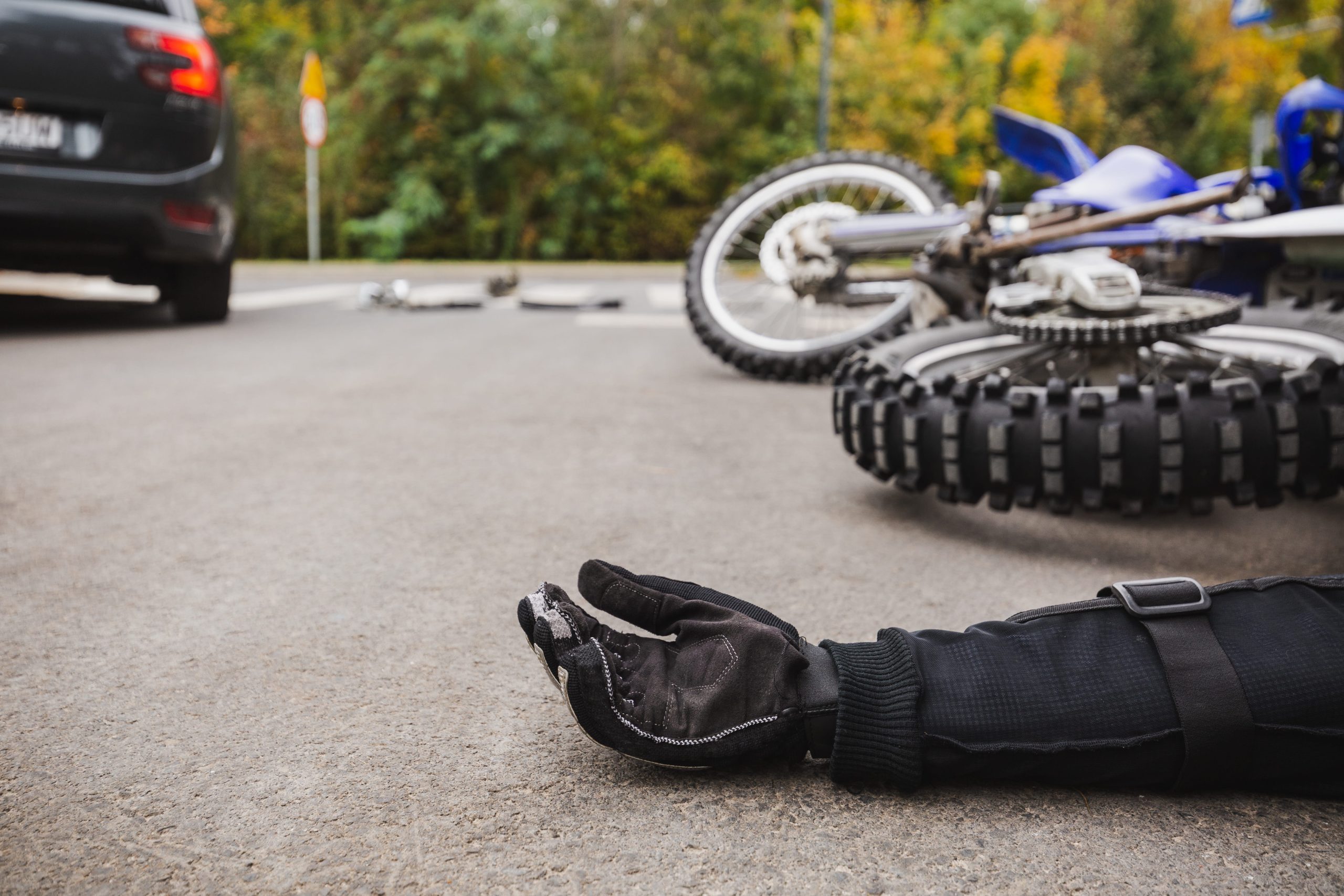
This is the “protect your body + protect the facts” window.
1) Move to safety (if you can).
Secondary impacts happen. If you’re able, get yourself and the bike out of the travel lane.
2) Call 911 and request medical help.
Adrenaline can hide head, neck, and internal symptoms. Early medical documentation also helps establish timing.
3) Photograph before vehicles move (if safe).
You’re trying to capture what will disappear:
- vehicle positions
- lane markings, debris, skid marks
- signals and signage
- lighting and weather
- bike damage (wide + close angles)
- helmet damage (front, sides, visor, straps)
4) Get identities and insurance.
Driver’s license, plate, insurance card, phone number. If a company vehicle is involved, capture branding and DOT-style identifiers if present.
5) Get witnesses.
Ask: “Can I text you a photo of your name and number?” Quick and clean.
6) Keep your words tight.
Don’t apologize. Don’t speculate. Don’t “work it out” at the curb. Just exchange info and let the report capture facts.
What To Do In The First 72 Hours
This is where many claims get stronger—or quietly weaker.
Get checked again if symptoms evolve.
Riders often feel worse the next day. Neck, back, shoulder, wrist, knee, and headache symptoms can show up late.
Follow the treatment plan.
Insurance companies love gaps. A gap lets them argue: “If it was serious, you would’ve treated.”
Preserve your gear and the bike.
Don’t repair, wash, or discard key items before documenting them. Keep:
- helmet
- jacket/pants
- gloves
- boots
- damaged parts that show impact direction
Start a simple recovery log.
Two lines daily are enough:
- pain/symptoms
- what you couldn’t do (sleep, work, lift, drive, walk normally)
Evidence Checklist For Inglewood Motorcycle Claims
Use this as your “claim file” list:
- police report number + agency
- ER/urgent care discharge notes
- follow-up records and referrals
- imaging orders/results (when applicable)
- scene photos/video
- witness contact info
- helmet/gear photos + saved items
- ride/GPS data if relevant
- wage loss proof (missed days, restrictions, pay structure)
- receipts: meds, rides, co-pays, medical devices
If the crash involved a driver’s unsafe move—turning, merging, rear-ending—see the auto-liability angle here: Inglewood Car Accident Attorney.
Common Causes Of Motorcycle Crashes In Inglewood
Most rider claims come back to predictable patterns:
- Left-turn collisions: the driver turns across your path
- Unsafe lane changes: “didn’t see the bike” merge
- Rear-end crashes: stop-and-go stacks at lights
- Dooring: parked vehicles opening into travel lanes
- Speed changes between signals: closing distance fast
- Road hazards: potholes, uneven pavement, loose gravel
- Event surges: unfamiliar drivers, distraction, aggressive positioning
For LA-wide motorcycle claim guidance (beyond Inglewood), see: Los Angeles Motorcycle Accident Attorney.
When To Call A Motorcycle Accident Lawyer In Inglewood
You don’t need a lawyer for every low-damage tip-over. But you should strongly consider a call if any of these apply:
- You hit your head, felt dazed, or have ongoing headaches
- You have fractures, torn ligaments, significant road rash, or back/neck injury
- You missed work, or your job duties changed
- Fault is disputed, or you’re being blamed
- There’s camera footage that needs to be preserved quickly
- The insurer pressures you into a fast settlement
- Multiple parties may share responsibility
You can also start broader with an Inglewood personal injury lawyer if you want help understanding options beyond motorcycle-only claims.
If you were hurt riding in Inglewood—especially near heavy corridors like Century or Crenshaw—don’t guess about your next step. Talk to an Inglewood motorcycle accident lawyer to understand what matters in your case and what to do next.
Frequently Asked Questions
- What should I do right after a motorcycle crash in Inglewood?
Call 911, get a medical evaluation, and document the scene. Then save your gear, collect witness info, and avoid recorded statements until you understand what’s being asked. - Are some Inglewood streets riskier for motorcycle crashes?
Yes. Busy multi-lane corridors with frequent turns and merges tend to be higher risk—especially where traffic surges and drivers rush signals. - How can I confirm whether an intersection is a crash hotspot?
Use current crash-mapping tools and focus on patterns, not anecdotes. Mapping can help verify whether an area shows repeat injury collisions. - Should I see a doctor even if I feel “okay” after the crash?
Yes, if there’s any chance of injury. Symptoms can appear later, and early documentation supports both your health and your claim. - What if the driver says they “didn’t see” my motorcycle?
That’s common, but it doesn’t excuse an unsafe turn or lane change. Evidence like photos, witness statements, and damage patterns can matter. - Do I need a lawyer if insurance already offered money?
Not always, but be careful. Early offers often arrive before your full medical picture is clear, and settling typically ends the claim.