
The San Gabriel Valley sits at one of the most active freight corridors in Southern California. The 10, 60, and 605 freeways move an enormous volume of commercial trucks through the region every day — hauling goods between the ports of Los Angeles and Long Beach, regional distribution centers, and destinations across the western United States. That volume creates risk. And when a fully loaded semi-truck jackknifes on the 60 near Rosemead, or debris from an unsecured load scatters across the 10 near El Monte, the consequences for everyone nearby can be severe.
If you or someone close to you was hurt in a commercial truck crash in East or South San Gabriel, understanding the liability structure of these cases is essential before you talk to any insurer. A San Gabriel Valley truck accident attorney can help you identify every party that may bear responsibility, which in truck accident cases is almost always more than one.
Here’s what you need to understand.
What Victims of Commercial Truck Accidents in the San Gabriel Valley Need to Know
Direct Answer: Why Truck Accident Liability Is Rarely Just One Party’s Problem
Unlike a standard two-vehicle collision, a commercial truck crash typically involves a web of potentially responsible parties: the driver, the trucking company, the cargo loader, the freight broker, the vehicle maintenance provider, and, in some cases, the truck or parts manufacturer. Which parties are liable depends on what caused the crash — and determining causation in a truck accident requires evidence that begins disappearing within hours of the collision. The involvement of multiple defendants also means multiple insurance policies and multiple defense teams, all of whom have an interest in shifting responsibility onto someone else. Getting ahead of that process early is what separates a well-supported claim from one that gets minimized before it’s fully built.
What To Do Next: 7 Steps After a Truck Crash in East or South San Gabriel
- Call 911 and ensure law enforcement responds — a commercial vehicle crash report captures carrier information, licensing data, and preliminary fault observations that are critical to your claim.
- Photograph everything at the scene: all vehicles, skid marks, road conditions, cargo debris, signage, and your visible injuries.
- Look for the truck’s DOT number, carrier name, and license plate — this information identifies the trucking company and allows you to pull carrier safety records.
- Collect witness names and contact information before the scene clears.
- Seek medical care immediately — same-day records establish the connection between the crash and your injuries.
- Do not speak with the trucking company’s insurer or sign anything before consulting an attorney.
- Contact a truck accident attorney as soon as possible — certain data from the truck’s electronic logging device and black box begins to be overwritten within days without a legal preservation demand.
The Corridors Where These Crashes Happen — and Why
East and South San Gabriel sit at the intersection of several of the region’s most freight-intensive corridors. The I-10 (San Bernardino Freeway) and SR-60 (Pomona Freeway) carry some of the highest commercial vehicle volumes in Los Angeles County, with trucks moving between the inland distribution hubs and the ports. The I-605 (San Gabriel River Freeway) serves as a major north-south connector that concentrates truck traffic through Pico Rivera, Whittier Narrows, and the southern end of the valley.
Surface streets in East San Gabriel — particularly Garvey Avenue, Valley Boulevard, and Rosemead Boulevard — also see significant commercial vehicle activity from local warehouses and distribution operations. Intersection crashes, rear-end collisions at traffic signals, and debris incidents from improperly secured loads are all common in this mixed-use freight environment.
The high density of both truck traffic and residential neighborhoods in this corridor is precisely what makes these crashes so dangerous — and what makes the liability questions so consequential.
Two Crash Types That Define SGV Truck Accidents
Jackknife Crashes: Causes and Liability Triggers
A jackknife occurs when a truck’s trailer swings outward relative to the cab, creating an acute angle that the driver cannot correct. On a freeway like the 10 or 60 — where trucks are moving at highway speed, and traffic can slow suddenly — a jackknife can block multiple lanes and create a catastrophic secondary collision scenario.
The most common causes include:
- Brake system failure or improper brake application — sudden hard braking on a loaded trailer can cause the rear wheels to lock, initiating the swing
- Speeding in wet or degraded road conditions — a driver traveling too fast for conditions has less margin to brake gradually
- Improper load distribution — a trailer loaded with the weight biased toward the rear handles differently under braking and is more susceptible to swinging
- Driver fatigue or impaired reaction time — federal hours-of-service regulations exist specifically because fatigued truck drivers make delayed or incorrect inputs in emergencies
Liability in a jackknife case may run to the driver for operational error, the trucking company for inadequate training or hours-of-service violations, the maintenance provider if brake systems were deficient, and the loader if weight distribution contributed to instability.
Unsecured Cargo: The Federal Standard and What Happens When It’s Violated
Federal Motor Carrier Safety Administration regulations under 49 CFR Part 393 set mandatory standards for how cargo must be secured on commercial vehicles. These rules specify the minimum number and placement of tie-downs, the working load limits of securement devices, and requirements for blocking and bracing specific cargo types. When those standards are not met and cargo shifts or falls, the results can be devastating — for other drivers struck by debris, for motorcyclists and cyclists in adjacent lanes, and for vehicles rear-ended by trucks whose loads shifted forward during braking.
Cargo securement violations open liability not just against the driver who operated the truck but against whoever was responsible for loading and securing the cargo. In many SGV freight operations, the loading responsibility falls to a third-party logistics company or warehouse operator — a separate defendant with separate insurance — entirely distinct from the carrier whose truck was on the road.
Who Can Be Held Liable — and Why the List Is Often Longer Than You’d Expect
Truck accident liability in California is not limited to the driver. Depending on what caused the crash, the responsible parties may include:
- The truck driver, for operational errors, hours-of-service violations, distracted or impaired driving
- The trucking company — for negligent hiring, inadequate training, failure to enforce compliance with federal safety regulations, or pressuring drivers to violate rest requirements
- The cargo loading company — for failing to meet federal securement standards, improper weight distribution, or failure to inspect and adjust cargo during transit
- The freight broker — if they directed cargo to a carrier with known safety violations or an inadequate safety record
- The maintenance provider — if brake failure, tire blowout, or mechanical defect contributed to the crash and resulted from negligent inspection or repair
- The truck or parts manufacturer — if a component defect, such as a faulty brake valve or tire separation, played a role
Each potentially liable party likely has its own insurer, and each insurer’s goal is to minimize its exposure by pointing responsibility at someone else. Building a claim that identifies all liable parties and holds each accountable requires systematic investigation from the start.
What Changes If a Car Were Also Involved
In multi-vehicle truck crashes on the 10 or 60, a passenger car is often involved as either a primary collision target or a secondary vehicle swept into the incident. If a car driver also bears partial fault — for example, if they cut in front of a truck that then lost control — California’s pure comparative negligence framework means fault is apportioned among all parties. Your recovery as an injured person may be reduced by any fault attributed to you, but it is not eliminated. A San Gabriel Valley car accident attorney can help evaluate the fault picture in multi-vehicle scenarios involving both a car and a commercial truck.
Why Truck Claims Are Different From Car Claims
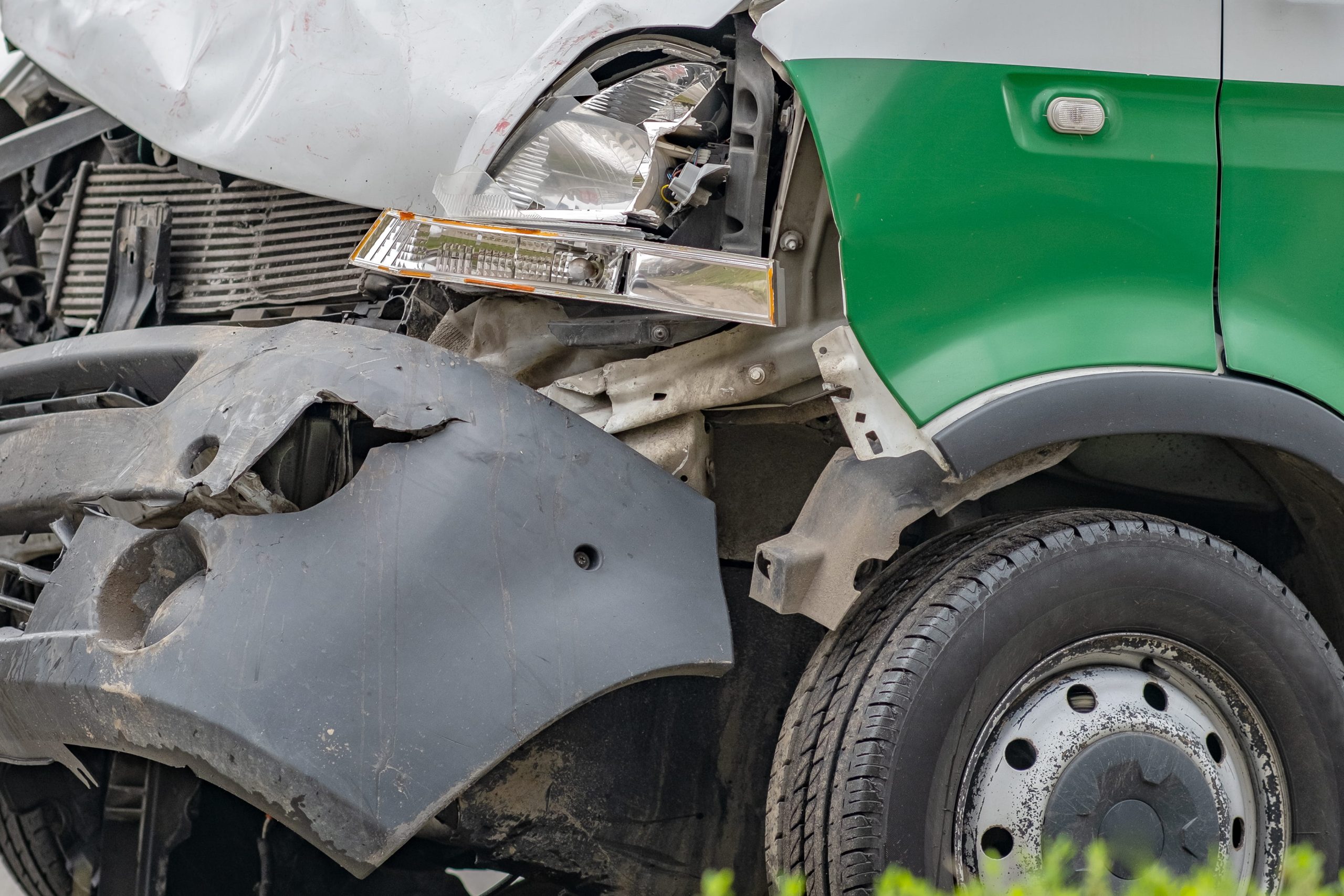
The evidentiary demands, the regulatory framework, and the number of parties involved make commercial truck cases significantly more complex than standard vehicle accidents. Federal trucking regulations — hours-of-service logs, inspection records, driver qualification files, maintenance records — all become relevant and must be obtained through a formal legal process.
A Los Angeles truck accident attorney experienced in commercial vehicle cases knows how to send preservation letters immediately, subpoena carrier records, retain accident reconstruction experts, and navigate the multi-insurer landscape that defines these claims. That expertise matters from the very first day.
Evidence That Disappears Fast in Truck Accident Cases
Some of the most important evidence in a truck crash begins to disappear within 24 to 72 hours without a formal preservation demand:
- Electronic Logging Device (ELD) data — records the driver’s hours of service and vehicle movement; may overwrite on a short cycle
- Event Data Recorder (black box) — captures speed, braking, throttle, and steering inputs in the seconds before impact
- Dashcam footage — from the truck cab or surrounding vehicles; often recorded over quickly
- Driver inspection and pre-trip reports — document whether defects were noted before departure
- Weigh station and border crossing records — establish the load weight and carrier compliance history
- Cargo manifests and loading documentation — identify who loaded the truck and what the cargo specifications required
An attorney can immediately issue a legal hold letter to the carrier, preserving this data before it’s lost. Waiting to retain counsel — even by a few days — can mean critical evidence is gone.
Mistakes That Cost SGV Truck Accident Victims Real Money
- Talking to the trucking company’s insurer first. Their adjuster is experienced in commercial claims and is gathering information to limit liability. Do not provide statements before consulting an attorney.
- Assuming the driver alone is responsible. The driver may be the face of the crash, but the chain of liability in commercial truck cases runs deeper. Settling only against the driver’s policy — or only against the carrier — may leave significant compensation unclaimed.
- Delaying medical care. A gap between the crash and your first medical record gives every defendant grounds to argue your injuries weren’t caused by the collision. Seek care the same day.
- Not preserving your own evidence. Photographs of the scene, your vehicle, and your injuries taken immediately are often the only visual record that exists before the commercial vehicle is repaired or replaced.
- Accepting a fast settlement. Trucking company insurers sometimes move quickly to settle before the full scope of injuries is clear and before all liable parties are identified. Early offers in commercial truck cases routinely undervalue the claim.
When to Talk to a Truck Accident Attorney in East San Gabriel
The complexity of commercial truck claims, the speed at which evidence disappears, and the number of parties who may share liability all point in the same direction: earlier legal involvement produces better outcomes in these cases.
Consider reaching out if:
- You were injured in a crash involving a semi-truck, box truck, or other commercial vehicle on the 10, 60, 605, or any San Gabriel Valley surface street
- The trucking company’s insurer has already contacted you
- Cargo debris, a jackknife, or a truck mechanical failure was involved in the crash
- Your injuries are serious — orthopedic, neurological, or requiring extended recovery
- Multiple vehicles were involved, and the fault picture is unclear
Most truck accident attorneys handle these cases on a contingency-fee basis — you pay nothing unless compensation is recovered on your behalf.
Preserving evidence early can make a real difference in what you ultimately recover. Get a free consultation with LA Injury Lawyers — no cost, no obligation.
Frequently Asked Questions:
- Can the trucking company be held responsible even if the driver was an independent contractor?
Potentially, yes. California courts and federal regulators apply tests that look beyond the independent contractor label to determine whether a carrier exercised sufficient control over the driver to establish liability. Trucking companies that set routes, mandate schedules, provide equipment, or require compliance with their operational procedures may be held responsible even when drivers are classified as contractors. This is a fact-specific analysis that an attorney can evaluate against the specific carrier and driver relationship in your case. - What if the truck that hit me was from a local warehouse or distribution center — not a major carrier?
The size or visibility of the carrier doesn’t change the applicable legal framework. Federal FMCSA regulations apply to commercial motor vehicles based on weight and use, not carrier size. A regional distribution company operating a fleet of box trucks on local SGV roads is subject to the same cargo securement, hours-of-service, and vehicle maintenance requirements as a national carrier. Local operations sometimes have weaker compliance cultures and less rigorous record-keeping, which can work in your favor with a thorough investigation. - What if I were hit by debris that fell from a truck, but I never saw which truck it came from?
Hit-and-run debris incidents are among the most difficult truck accident cases but not necessarily unwinnable. Traffic camera footage, witness accounts, nearby warehouse or distribution records, and law enforcement reports can sometimes identify the vehicle. An attorney can act quickly to preserve any available footage from freeway cameras, nearby commercial properties, or other vehicles in the area. The sooner that the investigation begins, the better the odds of identifying the responsible party. - How long does it typically take to resolve a commercial truck accident claim in California?
Commercial truck claims generally take longer to resolve than standard vehicle accident claims — often significantly longer. The reasons include the number of parties involved, the complexity of regulatory compliance investigations, the involvement of multiple insurers, and the seriousness of injuries that require extended medical documentation. Settling before your medical condition has stabilized typically results in an undervalued claim. The timeline is case-specific, but patience — supported by thorough documentation — usually produces better outcomes than a fast settlement. - Can I still recover compensation if I was partially at fault for the truck crash?
Yes. California follows pure comparative negligence, meaning your recovery is reduced by your percentage of fault — but you are not barred from compensation even if you share some responsibility. In a multi-vehicle crash on a congested SGV freeway, fault allocation between the truck driver, the carrier, and other vehicles is often contested. An attorney can build the evidence needed to minimize the fault attributed to you and maximize your recoverable damages. - How long do I have to file a truck accident claim in the San Gabriel Valley?
In most California personal injury cases, the statute of limitations is typically two years from the date of the accident. If a government entity — such as a public transit truck or county maintenance vehicle — was involved, a government claim may need to be filed within six months of the incident. These are general timelines and do not account for every case-specific variable. Confirm the deadline that applies to your situation with an attorney before taking any action, and remember that the evidence preservation issues in truck cases make early contact with counsel especially important.